The Complete Guide to Silk Pillowcases: Hair, Skin, Sleep & What Actually Matters
Silk pillowcases are often described as a beauty essential. They’re said to reduce frizz, soften skin, minimise sleep creases, and improve comfort in warm climates. But what do they actually do — and what is marketing exaggeration?
If you’ve been searching for “silk pillowcase for hair and skin”, “silk vs cotton pillowcase”, or “best silk pillowcase Australia”, this guide is designed to give you clarity rather than hype.
What Happens to Hair and Skin Overnight
Your body rests. Your hair and skin do not.
Throughout the night, you shift position dozens of times. Even subtle movements create friction between your face, hair and the pillow surface. Over time, that friction can influence texture, moisture balance and comfort.
For hair, overnight contact can contribute to:
Cuticle disruption
Tangling and frizz
Moisture transfer into fabric
Gradual mechanical stress
For skin, repeated pressure and fabric drag may:
Contribute to temporary sleep creasing
Increase irritation for sensitive complexions
Affect comfort in warm or humid conditions
The pillowcase you choose becomes the surface your hair and skin experience for roughly one-third of your life.
That surface matters.
Why Silk Pillowcases Matter in Australian Conditions
Climate influences hair and skin behaviour more than many people realise. In humid regions such as Queensland, hair cuticles can swell, increasing frizz. In drier climates or heavily air-conditioned homes, moisture loss becomes more noticeable. For hot sleepers in Australia, fabric breathability plays a significant role in comfort.Silk is naturally temperature regulating. It can feel cool in summer and comfortable in winter, making it suitable year-round.
What Silk Pillowcases Actually Help With
Reducing Friction on Hair
Silk fibres are naturally smooth. This smoothness creates less drag against the hair shaft compared to cotton or many synthetic fabrics.
Less drag can mean:
Reduced cuticle disturbance
Fewer overnight tangles
Less roughness in the morning
Lower cumulative friction over time
The key is understanding that silk reduces mechanical stress — it does not repair damage.
Supporting Skin Comfort
Silk is often associated with luxury skincare routines, but the real benefit lies in surface interaction.
Compared to rougher fabrics, silk may:
Reduce fabric drag on facial skin
Minimise temporary sleep lines caused by creasing
Feel gentler on sensitive complexions
A silk pillowcase does not treat acne, erase wrinkles, or replace skincare. Its value lies in creating a lower-friction environment.
Supporting Moisture Balance
Over eight hours of contact, cotton can draw moisture and surface oils away from both hair and skin. This is particularly noticeable in dry, air-conditioned bedrooms or during Australian summer nights.
Silk does not “hydrate” skin or hair. What it may do is reduce unnecessary moisture transfer into the fabric.
That can mean:
Hair that feels less dry at the ends
Skin that feels more balanced in the morning
Better retention of lightweight night products
What Silk Pillowcases Don’t Do
Silk pillowcases do not:
Cure acne
Eliminate wrinkles
Repair split ends
Replace conditioner
Prevent hair shedding
Transform skin overnight
They are a surface upgrade, not a treatment.
The benefit comes from reducing friction and absorption over time. It is subtle, cumulative and supportive — not dramatic or immediate.
Brands that overpromise often undermine credibility. A silk pillowcase is a thoughtful addition to a routine, not a replacement for it.
Silk vs Cotton vs Satin: What’s the Real Difference?
Silk vs Cotton
Cotton is durable and widely used, but it is:
More absorbent
Rougher at a microscopic fibre level
More likely to create drag against hair and skin
Silk is:
Smoother
Less absorbent
Naturally temperature regulating
Cotton is practical. Silk is protective.
Silk vs Satin
Polyester satin can feel smooth initially, but differs from silk in:
Breathability
Temperature regulation
Moisture interaction
Long-term durability
Real silk is a natural fibre. Polyester satin is synthetic.
Who Benefits Most from a Silk Pillowcase?
Fine hair
Fine hair tangles easily and shows friction damage quickly.
A silk pillowcase for fine hair can help reduce:
Morning tangling
Static
Rough texture
Curly or textured hair
Curls lose definition through disruption.
A silk pillowcase for curly hair overnight may help maintain:
Curl pattern
Reduced frizz
More manageable day-two hair
It supports preservation rather than control.
Colour-treated or bleached hair
Chemically processed hair has a more vulnerable cuticle.
Reducing friction can help minimise additional stress on sensitised strands, especially between salon visits.
Sensitive Skin
Silk’s smooth surface may feel gentler against reactive skin, especially when compared to rougher fabrics.
Hot Sleepers
For Australians who sleep warm, fabric breathability matters.
Silk’s temperature-regulating properties may feel more comfortable than heavier, less breathable materials.
How to Choose a Silk Pillowcase That Actually Works
Not all silk pillowcases are equal. Fabric weight, construction and closure style all matter.
Understanding Momme Weight
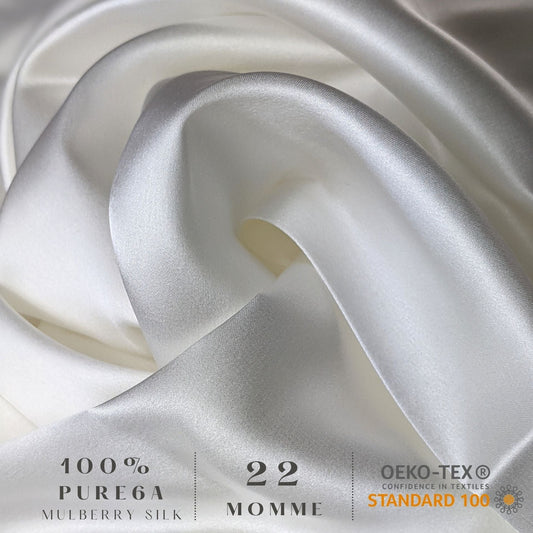
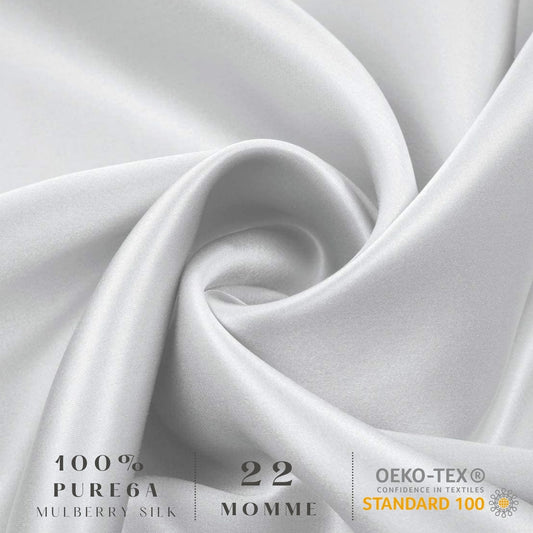
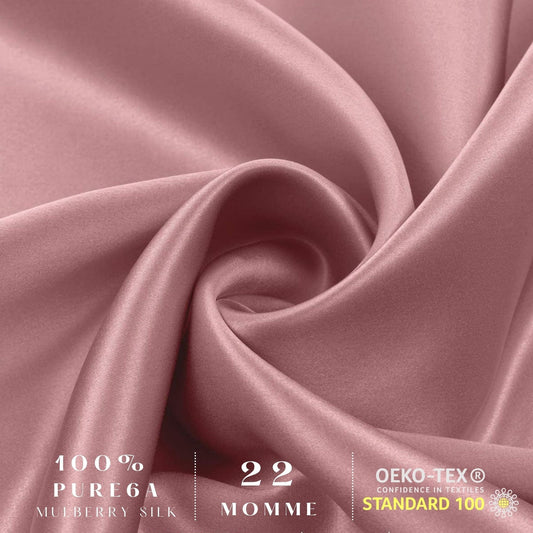
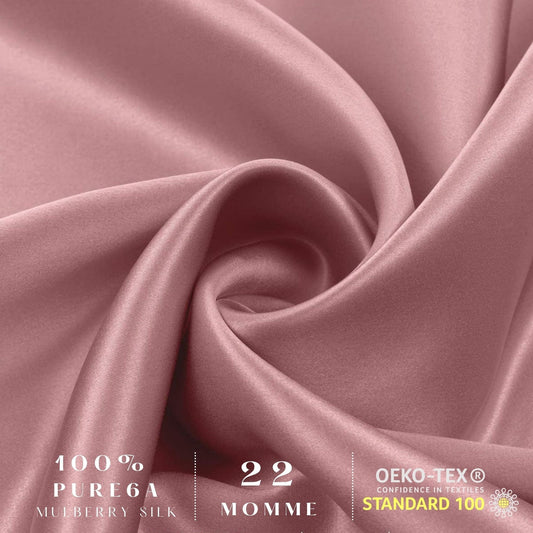
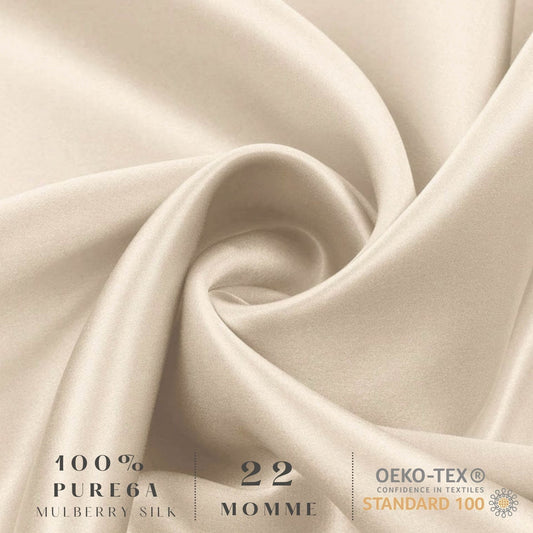
Momme (mm) measures the density of silk — in simple terms, how much silk is woven into the fabric.
16 momme: lightweight and breathable
19 momme: balanced softness and durability
22 momme: denser, more substantial, and longer-wearing
Higher momme silk generally offers greater durability and a more refined hand feel, while still maintaining silk’s natural smoothness and temperature regulation.
Closure Style: Envelope vs Zipper
Envelope closures look clean and classic, with a seamless finish. Hidden zippers feel more secure — and because silk is naturally smooth (and a little slippery), a zip helps keep the pillow insert in place so it doesn’t shift overnight.
Whichever you choose, look for smooth, well-finished seams with no rough edges.
How to Wash and Care for a Silk Pillowcase
Silk requires gentle but simple care.
For most households:
Wash every 7–10 days
Use cool to lukewarm water
Choose a mild detergent
Avoid bleach or harsh stain removers
Air dry away from direct heat
Proper care maintains smoothness and longevity.
Silk does not need complicated routines — just consistent gentleness.
So comfy! Perfect fit to go on and cover my head and hold my hair without being too tight. Wide elasticated band at back really helps, as do little drawstring ribbons. I do wonder, though - if that elasticated band were longer then it might be easier to put on and more comfortable around the ears?
It does look really nice and smart on!
Luxurious quality material, nice and thick. I washed it once, and it still holds up perfectly, no damage or thinning at all.
It also stays on really well. It was still securely in place on my head by morning, even after tossing and turning all night, it never slipped off. The best part is that it doesn't feel too tight at all. Really impressive fit.
One note is that my hair goes down to my waist, so an extra large would probably fit better. I bought two in large this time, but I'll probably go with extra large next time.
Very thoughtful and attentive customer service. Would definitely come back in the future.
Luxurious quality material, nice and thick. I washed it once, and it still holds up perfectly, no damage or thinning at all.
Customer service was excellent, too. Very thoughtful and attentive. When my order shipped a bit later than expected, they immediately sent an email to notify me and explain the delay. Really appreciated the proactive communication. Highly recommend.
As someone with curly hair who is learning to embrace it, finding the right winter hat has been tough. This was a splurge for me, but the mulberry silk lining is incredible and protects my hair perfectly. The cashmere blend is soft and warm, the pink color is gorgeous, and the removable pom-pom is such a nice touch. I honestly love everything about it and am so glad I treated myself!
Excellent product. I love a full body exfoliating mitt and always wanted 1 just for my face. I looked everywhere for a face mitt and LS Silk was 1 of the very few I managed to find. So glad I bought from LS Silk as the mitt is amazing, I ended up buying 2 so my daughter could have 1 and she loves how soft face felt after using it. Absolutely great face mitt and highly recommend
Lovely beanie, fast shipping. Love that the Pom Pom is removable. My only complaint is I really don’t understand why the silk lining is bright pink?! Why isn’t it black like the beanie?
Absolutely worth the money. I had been looking for an exfoliating mitt just for a face and so glad KS Silk Australia showed up on my internet search. Very easy to use and a grear size, left my facd feeling silky smooth. Highly recommend. Thanks
Lovely product, really notice the difference in my bub's hair loss (or lack of with this!). The team at LS Silk was extremely helpful and knowledgeable.
Would highly recommended
Bought this for my partner for Mother’s Day.
Absolutely loves this product, loves the adjustability, and the material quality is top tier. Safe to say I did good this year.
Thank you for the ease of purchase and customer experience, if there is anything else my partner would like, I will definitely be coming back to this outlet.
Love it!
Doesn't fall off through the bight. It's so soft and my head doesn't heat up. Packaging lovely. I will be purchasing another one. Would highly recommend over other cheap versions.
My scarf arrived very quickly in perfect order. It is supreme, so soft it is like handling thistle down.
My skin is very sensitive to even the softest wool, and cashmere is perfect for me. This is so fine and so warm it will be my favourite this winter. Thank you so much.
I’ve always had trouble with bonnets not staying on or having to do them so tight that my ears hurt the next day from the pressure, and my forehead would have an indent in it from being too tight. This one is super easy to get on, super adjustable, has elastic at the back to hold on to your head and you can also tighten it with the little straps. It stays on all night no budging and no indents on my forehead from where it’s been sitting. I will be buying more asap!
I really love these little scrunchies. They are just the right size to put my hair up and I like that they fit on my wrist. I appreciate getting a bonus purple one in the pack of pinks because I wanted purple ones and they were unavailable at the time so I was pleasantly surprised to get one!