Silk bonnets are often spoken about in extremes. They’re either hailed as overnight miracles or dismissed as unnecessary. The truth sits somewhere in between — and understanding that middle ground is what separates smart hair care from marketing noise.
If you’ve ever searched for “does a silk bonnet really work?” or wondered whether a silk bonnet for frizzy hair in Australia is worth the investment, this guide is designed to answer you properly.
What Happens to Hair Overnight
Hair doesn’t “rest” when you sleep. Even if you feel still, your head typically moves dozens of times per night. Micro-turns, rolling, repositioning — each movement creates friction between your hair and whatever surface it touches.
Over time, that friction can:
Lift the hair cuticle (the outer protective layer)
Create roughness and frizz
Increase tangling
Contribute to gradual breakage
Disrupt curl definition
Accelerate moisture loss
Cotton pillowcases, in particular, can absorb natural oils from the hair shaft. In dry or air-conditioned Australian homes, this effect can feel amplified — especially during summer nights.
The result? You can go to bed with smooth, styled hair and wake up with texture that feels dull, frizzy or harder to manage. A silk bonnet doesn’t change your hair type. What it does is change the environment your hair experiences overnight.
What Silk Bonnets Actually Help With
Reducing Friction
Silk fibres are naturally smooth and create less drag against the hair shaft compared to cotton or synthetic blends.
Less drag means:
Reduced cuticle disturbance
Fewer tangles
Less mechanical stress on strands
Lower likelihood of overnight breakage
This is why many people searching for “does a silk bonnet help with hair breakage” notice gradual improvement over time. It’s not repair — it’s prevention.
Minimising Moisture Loss
Silk is naturally less absorbent than many common bedding fabrics, so it’s less likely to draw moisture and surface oils away from your hair overnight.
Less absorption can mean:
Less transfer of your hair’s natural oils into the fabric
Better retention of lightweight leave-in products
Reduced overnight dryness, especially through the lengths
Cotton, by contrast, is highly absorbent and can pull moisture and oils into the fabric over hours of contact.
Containing Hair Movement
This is where a silk bonnet differs significantly from a silk pillowcase. A pillowcase protects the surface beneath your head. A bonnet moves with you.
If you:
Toss and turn frequently
Sleep on your side
Have long hair that spreads across the pillow
Wake up with tangles at the nape of your neck
Containment can matter more than surface smoothness.
What Silk Bonnets Don’t Do
Silk bonnets do not:
Stimulate hair growth
Repair chemical damage
Reverse split ends
Replace conditioning treatments
Transform hair overnight
They are not a treatment but a protective measure.
If your hair is already compromised from bleach or heat styling, a bonnet can help reduce further friction-related stress. But it cannot undo existing structural damage.
The benefit is cumulative and preventative — not dramatic and immediate.
Who Benefits Most from a Silk Bonnet?
Fine hair
For fine hair, benefits may include:
Reduced overnight tangling
Less pulling at the roots
Smoother texture in the morning
Fewer flyaways
Curly or textured hair
Potential benefits include:
Better curl definition retention
Reduced frizz
Less need to restyle in the morning
Improved moisture balance
Colour-treated or bleached hair
Chemically processed hair typically has a raised cuticle layer, making it more vulnerable to friction and moisture imbalance.
If you’ve invested in balayage, highlights or full colour, you’re already protecting your hair with products. A silk bonnet extends that protection into the hours you don’t see.
When a Bonnet Matters More Than a Pillowcase
A silk bonnet tends to matter more if:
You toss and turn (or wake up in a different position than you fell asleep)
You sleep on your side and your hair gets pressed or dragged against the pillow
You wake up with tangles at the nape or around the crown
You have long hair that spreads across the pillow
You’re trying to preserve curl definition or a blow-dry for more than one day
Your hair is colour-treated or fragile and breaks easily with friction
A silk pillowcase may be “enough” if:
You sleep fairly still
Your hair is short or doesn’t move much overnight
You prefer not to wear anything on your head
How to choose a silk bonnet that actually works
Not all bonnets feel the same — and the difference is usually in the details. The right silk bonnet should feel secure enough to stay on, but comfortable enough that you forget you’re wearing it.
Fit: secure, not tight
A good bonnet sits smoothly around the hairline without digging in. If it’s too loose, it slips off. If it’s too tight, it can feel uncomfortable and may leave pressure marks.
Look for:
A gentle, stable fit that stays in place overnight
A finish that doesn’t feel scratchy around the edges
A design that suits your sleeping style (especially if you move a lot)
How to Choose the Right Silk Bonnet Size
Measure around your head along the hairline — across your forehead, around the ears (optional), and down to the nape of your neck. Whether you include your ears is purely personal preference and depends on how you like your bonnet to sit.
LS Silk bonnets come in three sizes:
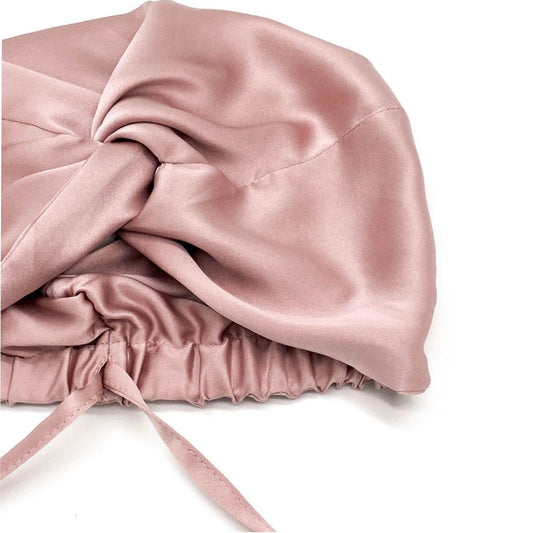
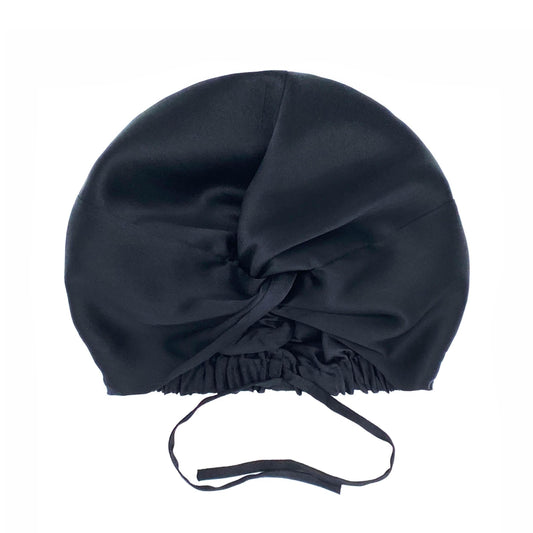
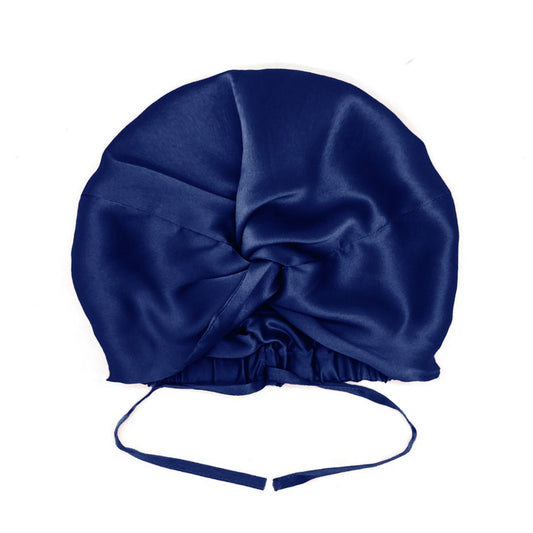
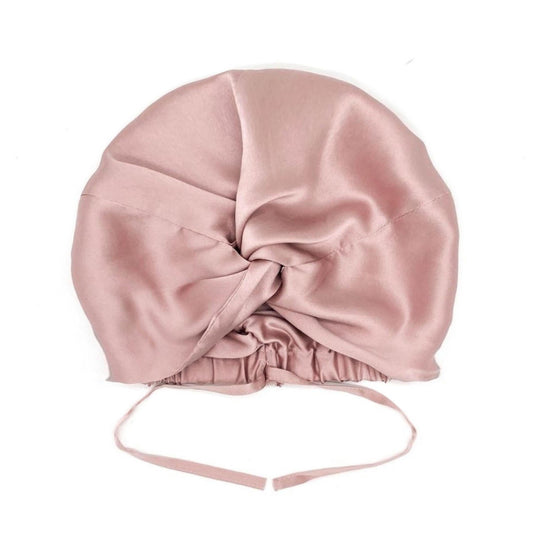
Small–Medium, Medium, and Medium–Large. Each bonnet has elastic at the back opening, designed to flex for a comfortable fit across a range of head sizes.
Small–Medium: measures about 18.9 in relaxed and stretches up to 20.5 in (48–52 cm). Best for head measurements of 18.9–20.5 in (48–52 cm). Medium: measures about 20.5 in relaxed and stretches up to 22.0 in (52–56 cm). Best for head measurements of 20.5–22.0 in (52–56 cm).
Medium–Large: measures about 22.0 in relaxed and stretches up to 23.6 in (56–60 cm). Best for head measurements of 22.0–24.4 in (56–62 cm).
When to size up
If you have very long hair (past bra strap), very thick hair, or wear protective styles like box braids, locs, or twists, we recommend choosing the larger size even if your head measurement is under 22.0 in (56 cm). The extra room helps keep hair comfortably tucked in without feeling tight.
We always recommend measuring before purchasing — it’s the easiest way to get a secure, comfortable fit that stays on through the night.
Match the bonnet to your hair type
Fine hair
Prioritise lightweight comfort and a gentle hold
A smoother fit helps reduce tangling without flattening the hair
Silk is easier to look after than many people expect — it just responds best to gentle habits. A little care keeps the fabric smooth, comfortable, and long-wearing.
How often to wash
A practical guide:
Every 1–2 weeks for most people
More often if you use heavy hair products, or during hot Australian summer nights
How to wash (simple and realistic)
Use cool to lukewarm water
Use a gentle detergent (avoid harsh stain removers or bleaching agents)
Hand wash or use a delicate cycle if your bonnet care label allows
Avoid high heat and tumble drying
Air dry in shade to protect the fibres
The goal isn’t perfection — it’s consistency. Clean silk stays smoother, feels nicer on the scalp, and performs better over time.
Australian conditions are not neutral. Humidity in Queensland, dry heat in Western Australia, and fluctuating temperatures in southern states all influence hair behaviour. In humid environments, hair cuticles lift more easily, increasing frizz. In dry, air-conditioned rooms, moisture loss can become more pronounced. Silk’s natural temperature-regulating properties make it suitable year-round. It is breathable and lightweight, which is why many people concerned about “is a silk bonnet too hot for summer?” find it surprisingly comfortable. The key lies in quality silk and proper construction — not synthetic satin that traps heat.
Frequently Asked Questions
Will a silk bonnet flatten fine hair? A properly fitted bonnet should not compress hair excessively. Look for gentle elastic and breathable construction.
Is a silk bonnet too warm in summer? High-quality silk is temperature regulating and breathable, making it suitable for warm Australian nights.
How often should I wash a silk bonnet? Typically every 1–2 weeks, depending on product use and climate. Always follow care instructions.
Can I use both a silk pillowcase and a silk bonnet? Yes. Some people prefer the added layer of protection, particularly if they move frequently in their sleep.
Is satin the same as silk? No. Satin refers to a weave, not a fibre. Many satin bonnets are made from polyester. Real silk is a natural fibre with different breathability and moisture properties.
Stays Secure: The adjustable strap/drawstring is a game changer it stays put all night without feeling too tight or leaving marks on your forehead. Hair Protection: The double lined silk keeps my hair moisturized, drastically reduces frizz and breakage, and preserves curls and styles until morning. Stunning Shade: The Viridian color is rich and looks just as luxurious in person as it does online. Roomy Size: The large size easily accommodates thick hair, long braids, or voluminous curls without squishing them.
I have been looking for this type of glove for ages. I use to use one years ago and I could no longer find one. It had to be the silk one. I tried this company and it was what it was looking for. It exfoliates my face without irritating any acne or other bumps. I’m putting nothing on my face but water. I have sensitive skin so I don’t like using exfoliating washes and products. Leaves your skin so smooth !
So comfy! Perfect fit to go on and cover my head and hold my hair without being too tight. Wide elasticated band at back really helps, as do little drawstring ribbons. I do wonder, though - if that elasticated band were longer then it might be easier to put on and more comfortable around the ears?
It does look really nice and smart on!
Love the beanie and colour! It's my second beanie purchase, my son loves the grey!
I've always bought from lovesilk a variety of items, scarf scrunchie headband PJs... All are great quality and colour. Worth every cent! Very friendly and helpful customer care!!
I really like it but I find that it’s to big and keeps coming off - so I had to clip it there to hold it in place so that’s the down fall of not getting all the stars - the fabric is lovely to wear I do recommend it but hey some of us hve bigger heads than others and this would fit someone with a bigger heads than average-
My hair looks amazing when I slept with this! Silky soft the next day. Unfortunately after a week of wearing it my forehead broke out so much! I was so sad to stop using it. It’s great but if you have sensitive skin like me just be careful 💗
It does the job for me, but it doesn't remain in the same position and place for long before moving, and often the front covers my eyes. Even though I secure the bonnet with the attached strings, it may not be quite the right fit for me. But otherwise the quality seems fine, and I like the colour I chose (champaigne). Thank you for your friendly and efficient service, and for providing practical, good-quality premium silk products :)
I wouldn’t call this “large”. I have medium thickness, curly, shoulder length hair and i struggle to get it all into the bonnet. The hair doesn’t have alot of room to move and is squished in there. I feel the elastic is too thin. because of how tight it needs to be to stay on my head, and the lack of roominess the elastic sits right across my ears which hurts as I’m a side sleeper. With the cost it’s disappointing, compared to a much cheaper option I had previously.
Luxurious quality material, nice and thick. I washed it once, and it still holds up perfectly, no damage or thinning at all.
It also stays on really well. It was still securely in place on my head by morning, even after tossing and turning all night, it never slipped off. The best part is that it doesn't feel too tight at all. Really impressive fit.
One note is that my hair goes down to my waist, so an extra large would probably fit better. I bought two in large this time, but I'll probably go with extra large next time.
Very thoughtful and attentive customer service. Would definitely come back in the future.
Luxurious quality material, nice and thick. I washed it once, and it still holds up perfectly, no damage or thinning at all.
Customer service was excellent, too. Very thoughtful and attentive. When my order shipped a bit later than expected, they immediately sent an email to notify me and explain the delay. Really appreciated the proactive communication. Highly recommend.
As someone with curly hair who is learning to embrace it, finding the right winter hat has been tough. This was a splurge for me, but the mulberry silk lining is incredible and protects my hair perfectly. The cashmere blend is soft and warm, the pink color is gorgeous, and the removable pom-pom is such a nice touch. I honestly love everything about it and am so glad I treated myself!